 By Mari Hansen
 There’s a phrase that has followed Goldman Sachs around for decades, half-mocking and half-accurate: Government Sachs. You hear it whispered at policy conferences in Washington, scribbled into op-eds, and muttered by traders watching cable news in lower Manhattan.
It keeps proving itself, which is why it’s stuck. Every few years, another familiar face from 200 West Street ends up walking into a West Wing meeting, briefcase in hand, looking like he never really left finance behind.
| Field | Details |
|---|---|
| Company Name | Goldman Sachs Group, Inc. |
| Founded | 1869 |
| Founder | Marcus Goldman |
| Headquarters | 200 West Street, New York City |
| Industry | Investment Banking, Financial Services |
| Public Offering | May 4, 1999 |
| Notable Alumni in Government | Henry Paulson, Steven Mnuchin, Gary Cohn, Stephen Bannon, Mario Draghi |
| Current CEO | David Solomon |
| Listed On | NYSE (Ticker: GS) |
| Regulatory Filings | Available via SEC EDGAR |
| Employees | Approximately 46,000 globally |
The pattern started long before anyone noticed it as a pattern. Sidney Weinberg, the man they called “Mr. Wall Street,” spent six decades at Goldman and somehow found time to advise four sitting presidents. During World War II, Franklin Roosevelt pulled him into the War Production Board, an unusual move for a banker. Weinberg apparently loved both roles, treating government service less as a detour and more as an extension of the firm’s reach. That blueprint, quietly drawn in the 1940s, never really got thrown away.
Watch the parade of names since then and the resemblance is hard to miss. Clinton’s Robert Rubin. Henry Paulson under Bush, arriving at Treasury just in time for the financial system to start cracking apart in 2008. Then Gary Cohn and Steven Mnuchin under Trump, both shaping tax policy and economic strategy from offices a short walk from the Oval. It’s not just Treasury, either. Stephen Bannon, who shaped the Trump administration’s earliest months, spent the 1980s doing mergers work at Goldman before reinventing himself as a populist provocateur. He may be the only one who doesn’t understand the irony.
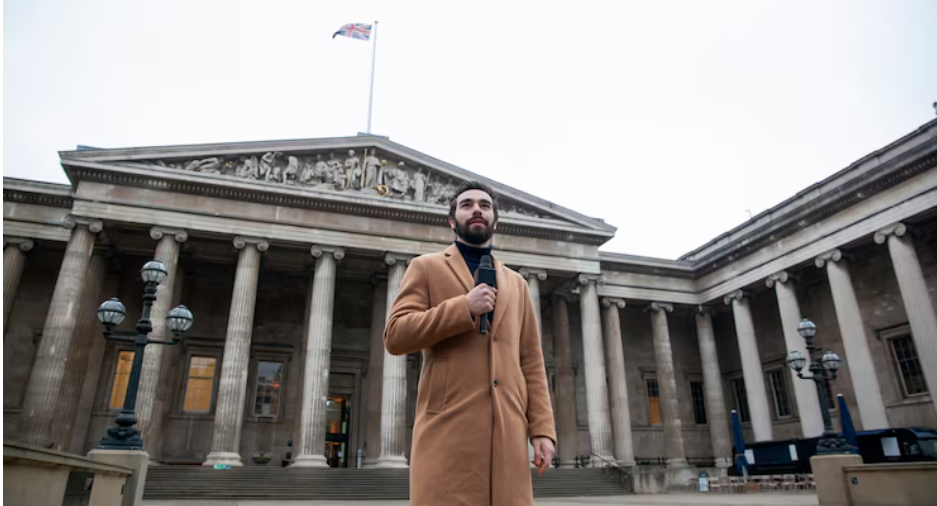
Contrary to what cable pundits occasionally suggest, there is no conspiracy behind the firm’s enduring Washington presence. It’s more subdued. Goldman has spent generations cultivating individuals who are proficient in both capital markets and policy, a rare combination in both fields. The shortlist is typically very small when the White House needs someone who can read a Senate Finance Committee bill and a balance sheet in the same afternoon. Additionally, at least one Goldman name is typically included.
Traces of this influence can also be seen abroad. After serving as Goldman’s vice chairman in Europe, Mario Draghi became the head of the European Central Bank. The former governor of the Bank of England, Mark Carney, also went through. It seems as though the company has created an unofficial alumni network, less club than commonwealth, with former bankers holding positions at regulatory bodies, central banks, and finance ministries on both sides of the Atlantic. In that explanation, coincidence plays a major role. This also applies to the company’s hiring practices.
The arrangement, according to critics, leads to clear conflicts. Goldman, according to his supporters, just employs people who would have gone into politics anyhow. There is some truth to both points of view, which is probably why the argument never ends. The access is more difficult to contest. Calls are returned more quickly. Meetings are set up earlier. Drafts of policies are read with a certain familiarity. Whether that is beneficial for markets, detrimental to democracy, or simply how Washington has always operated when money is at stake is still up for debate.
The glass facade of the company’s Hudson headquarters reveals very little. However, the impact spreads to a city 230 miles to the south, where it has silently taken up residence for what appears to be a very long time.