 By Mari Hansen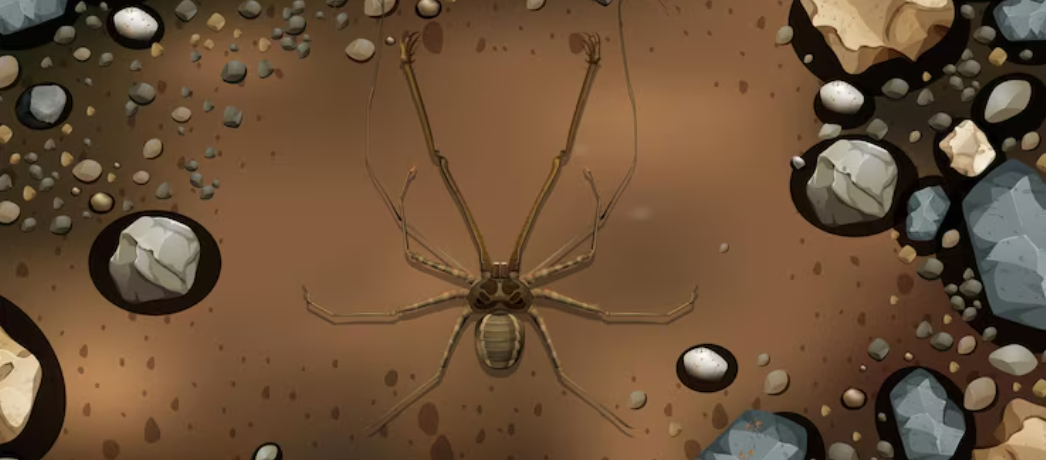
The latest photos from Mars have a subtle unnerving quality. Not overly dramatic. Not explosive. It’s just weird enough to stick in your head.
The Curiosity Rover has been stealthily traversing Mount Sharp’s slopes for months. From orbit, the terrain appears as though massive spiderwebs have been scraped into the planet’s surface. We refer to these formations as boxwork ridges. They are only a few feet high up close, but they extend for miles, intertwining like the strands of an old, fossilized web.
| Category | Details |
|---|---|
| Mission | Mars Science Laboratory – Curiosity Rover |
| Launch Year | 2011 |
| Landing Site | Gale Crater, Mars |
| Target Region | Mount Sharp boxwork formations |
| Rover Size | SUV-sized robotic vehicle |
| Operating Agency | NASA |
| Scientific Goal | Study ancient Martian climate and potential habitability |
| Key Instruments | Drill, X-ray spectrometer, chemical laboratory, high-temperature oven |
| Notable Discovery | Spiderweb-like boxwork ridges with unusual mineral nodules |
| Reference | https://mars.nasa.gov/msl |
Then there are the “eggs.”
Small, rounded nodules—pebble-sized mineral lumps that appear strangely organic—are tucked into sandy hollows and strewn along the ridges. They resemble clusters of eggs left behind by something that crawled away millions of years ago in photos returned from Mars, giving them an almost biological appearance. They are geological, according to scientists. However, there is a certain hesitancy about the shapes. Mars is able to accomplish that.
After years of climbing, the rover arrived at this area inside Gale Crater. A distinct chapter in the planet’s distant past is represented by each layer of the mountain. There is evidence of rivers and lakes in the lower layers. Higher layers imply that the planet is drying out and that water is retreating underground, leaving behind dust and salt. However, that narrative is complicated by the spiderweb formations.
These ridges were probably created billions of years ago when groundwater seeped through bedrock fissures. The water’s dissolved minerals solidified the fracture lines, creating reinforced rock veins. The softer surrounding material was stripped away by wind over vast periods of time. These crisscrossing ridges were all that was left, resembling the skeleton of an underground plumbing system. They look like enormous spiderwebs from space. They resemble a labyrinth up close.
It’s difficult to navigate a rover through them. The ridges are narrow enough to make navigation difficult, according to engineers at NASA Jet Propulsion Laboratory. The rover’s nearly one-ton body must frequently be balanced on pathways that are only slightly wider than its wheels as it drives straight along the ridge tops.
It’s difficult to imagine the stress inside mission control as commands are transmitted across space, with each instruction taking roughly fifteen minutes to reach Mars, as you watch the terrain develop through rover photos. The rover could sink into sand with a single incorrect turn. It seems worth the risk, though. Because the ridges are revealing a narrative that scientists did not anticipate.
Strange dark lines that ran through the spiderweb patterns were hinted at in orbital images for years. Curiosity has now verified that these are fractures—places where groundwater used to push through rock. That alone raises the possibility that Mars stayed wet for a longer period of time than previously thought. This leads to a more general idea that researchers obviously consider but seldom express aloud.
Microbial life, if it ever existed, might have had more time to survive if groundwater had been present here for a longer period of time than anticipated.
The puzzle is further complicated by the egg-like nodules. Usually, when groundwater evaporates and leaves behind minerals, these mineral bumps are created. On Mars they’ve been seen before. Here, however, they show up in strange locations—inside hollows and along ridge walls, as opposed to the fractures where scientists had anticipated them. Geologists are bothered by that detail in the same productive way that puzzles are.
One theory is that early mineral flows cemented the ridges, causing them to harden first. New minerals may have been deposited in the areas around them as a result of later groundwater events. Another theory is that the locations of mineral accumulation were shaped by minute chemical gradients in the soil. However, the reality is more straightforward: no one truly knows yet.
It takes more than just taking pictures of these rocks to be curious. It is penetrating them. The rover is equipped with a tiny lab that can scan samples’ chemical fingerprints, grind them into powder, and heat them to extremely high temperatures.
Some of those tests have already found carbonate minerals in the hollows and clay minerals in the ridges, both of which are clear signs that water once interacted with these rocks.
Long carbon-chain molecules were found in earlier samples from surrounding areas, which is even more fascinating. These molecules are frequently found in biological structures on Earth, such as cell membranes. This does not imply that they originated from life on Mars. They can be created by chemistry alone. However, the mystery is further complicated by their presence.
Recently, scientists used a method known as wet chemistry to conduct one of Curiosity’s most sensitive analyses. Because the rover has run out of reagents after more than ten years on Mars, it is rarely used. It must be similar to waiting for a medical test to wait for those results. Quietly hopeful. A little nervous.
The rover will soon depart from the spiderweb area and proceed up Mount Sharp’s sulfate-rich layers. Mars continues to show a pattern: a drying climate, a wetter past, and sporadic returns of water. It’s unclear exactly where the boxwork ridges fit into that timeline.
Observing this from Earth gives me an odd feeling as I stand back from the data. Examining rocks that last came into contact with liquid water billions of years ago, a machine the size of a small car is crawling across another planet.
Occasionally, those rocks resemble eggs strewn throughout a network of stones. Most likely, it’s geology. However, scientists have previously been taken aback by Mars.