 By Mari Hansen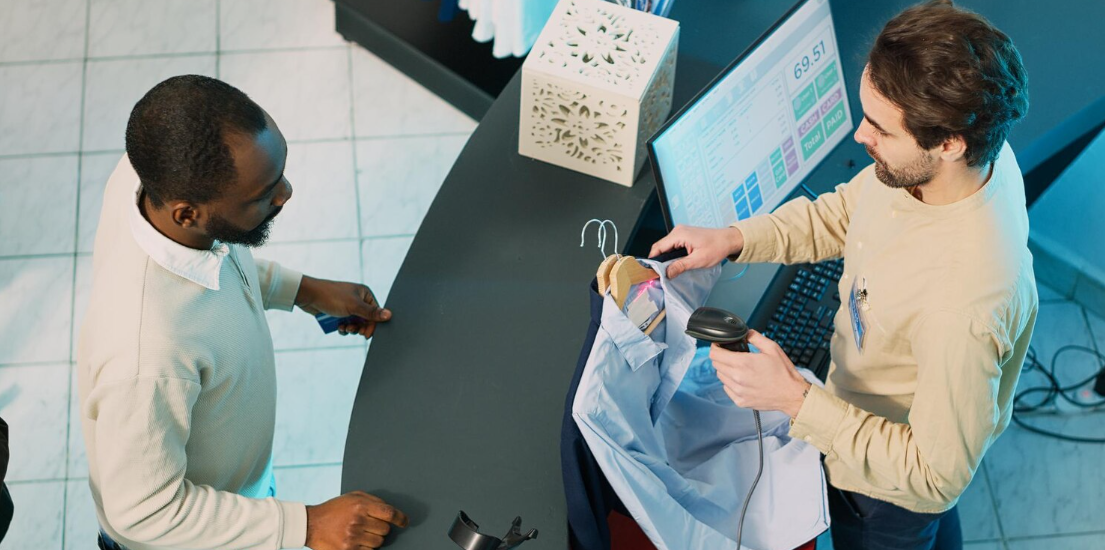
Nowadays, a peculiar moment occurs in a lot of stores. A customer walks in holding a phone glowing with AI recommendations, algorithm-generated outfit ideas, maybe even a chatbot telling them what to buy. After that, they cease. They raise their gaze. And they still seek guidance from a human. Perhaps the most illuminating scene in retail today is that silent pause.
The industry has rapidly embraced artificial intelligence, which can now write product descriptions, forecast demand, create marketing campaigns, and even produce video advertisements. Executives discussed AI at events like NRF Retail’s Big Show this year, just as retailers used to discuss barcode scanners or credit cards: essential infrastructure. stakes on the table. It’s something that every business must embrace.
| Category | Details |
|---|---|
| Topic | Human-Driven Retail Sales and Store Associates in the AI Era |
| Industry | Global Retail and E-Commerce |
| Key Example | REI store associates (“Green Vests”) |
| Key Industry Event | NRF Retail’s Big Show |
| Supporting Research | World Economic Forum – Future of Jobs Report |
| Focus Skills | Empathy, negotiation, real-world experience, judgement |
| Reference | https://www.weforum.org/reports/the-future-of-jobs-report-2023 |
However, something else becomes clear when you stroll through actual stores. The human sales associate, a position that most people thought would vanish, is still stubbornly outside the purview of algorithms. More intriguingly, some retailers are embracing this reality.
Employees in green vests at REI engage in lengthy discussions with patrons about hiking boots, tents, or the agony of camping during an unexpected thunderstorm. During the conference, their CEO, Mary Beth Laughton, stated unequivocally that AI hasn’t advanced. It hasn’t gone camping. It has never slept with the wind slapping nylon fabric in a freezing tent at two in the morning. More than most retailers anticipated, that experience is important.
A young employee in a Colorado REI store last winter patiently explained weight distribution to a couple getting ready for their first outdoor excursion while crouched next to a display of climbing harnesses. The discussion went on for almost twenty minutes. The same specifications could have been produced in a matter of seconds by a machine. However, the clients continued to inquire. The worker continued to respond, laughing every now and then and sharing little anecdotes about mistakes made on previous climbs.
It’s difficult to miss something subtle when observing interactions like that: people frequently prefer reassurance to information. AI is very good at information. It still seems human to be reassured.
Silently, retail executives are starting to acknowledge this. Many businesses are experimenting behind the scenes with AI tools to speed up operations, such as automated marketing, customer analytics, and inventory forecasting, while also attempting to increase rather than decrease the visibility of store employees. Even “human amplification” is a term that some executives use, but it sounds a little too formal for what is basically common sense. For the data, use machines. For the messy part, use people.
This intuition is supported by the research. The World Economic Forum has consistently discovered that judgment, social intelligence, persuasion, and emotional nuance are the abilities that AI finds most difficult to imitate. These skills are most evident on the sales floor in retail, where each customer has slightly different expectations and concerns.
A running shoe recommendation can be made by a chatbot. It finds it difficult to discern when someone appears hesitant to spend $160.
Experienced retail employees step in at that point—hesitancy, pride, perhaps even a little embarrassment. They interpret posture. tone. Make eye contact. Then they respond in ways that rarely follow a script.
Additionally, AI still struggles with a physical component. Real-world retail environments include packed aisles, bulky boxes, unexpectedly collapsing displays, and fitting rooms that require constant supervision. The human body and brain cooperate, and it is still surprisingly challenging to automate the human body’s mobility, dexterity, and awareness.
The challenge of a machine swiftly rearranging a disorganized clothes rack during a weekend rush has eluded even the most sophisticated robotics labs.
Independent merchants appear to be particularly conscious of this benefit. Smaller stores frequently operate more quickly than larger chains, testing new products, making overnight display adjustments, and having direct conversations with customers about what is and is not selling. These retailers are remarkably nimble, according to Jen Burke, an executive at wholesale platform Faire, who recently said that they are small enough to change course before bigger businesses have even completed their data analysis.
There is frequently a feeling of improvisation when strolling through a local boutique or outdoor store. Workers are moving shelves. Regulars are greeted by name by owners. discussions that go well beyond the initial purchase.
It’s a messy improvisation. ineffective. difficult to scale. It might also be precisely what AI finds difficult to imitate.
All of this does not, of course, guarantee the safety of retail employees. In an effort to reduce payroll, many businesses continue to treat store employees as cost centers while covertly experimenting with automation. AI-powered recommendation systems, cashierless stores, and self-checkout kiosks are rapidly proliferating.
However, a conflict is developing within the sector. Efficiency is what retailers desire. People seem to be what customers want.
Executives are beginning to see that the actual competitive weapon against pure e-commerce may be the stores themselves. Unpredictable human interaction is something that a physical store can provide that a website cannot.
A straying conversation. guidance influenced by personal experience. Perhaps even a brief moment of mutual trust. And that seems to be the retail trade that AI is still unable to fully penetrate, at least for the time being.