 By Mari Hansen
 A Tuesday morning drive down Broad Street will reveal something that seems almost out of place in light of the current state of American labor. Cranes for construction. hard hats. The early light catches freshly poured concrete. Quietly and with a kind of unwavering focus that the rest of the nation seems to have forgotten was even possible, Columbus, Ohio has been building.
Even economists are still struggling to understand how dire the situation is on a national level. The U.S. job market was much weaker than the headline figures suggested, as the Bureau of Labor Statistics recently confirmed what many had suspected.
| Category | Details |
|---|---|
| City | Columbus, Ohio |
| Region | Midwest United States |
| Population (metro area) | ~2.1 million |
| Jobs Added (2024–2025 period) | ~10,000 net new positions |
| Key Growth Sectors | Technology, healthcare, advanced manufacturing, logistics |
| National Jobs Revision (BLS, 2024–25) | 900,000 fewer jobs than previously reported |
| National Hiring Freeze Rate | 1 in 10 companies implemented full hiring freeze (Resume.org, 2025) |
| Mayor | Andrew Ginther (D), in office since 2016 |
| Notable Employer Anchors | Ohio State University, Nationwide, Intel (planned campus), JPMorgan Chase |
| Reference / Data Source | Resume.org 2025 Hiring Survey |
The largest downward revision on record occurred in 2024 and 2025, with over 900,000 fewer jobs created than initially reported. It’s not a rounding error. That amounts to the livelihoods of an entire city that were more prevalent on a spreadsheet than in actuality.
Additionally, these figures came at a time when the political atmosphere surrounding labor data was already deteriorating, following the dismissal of the BLS commissioner due to a lower-than-expected monthly report. Depending on your point of view, you may interpret that as administrative accountability or political pressure on an independent institution, but it’s difficult to ignore the timing.
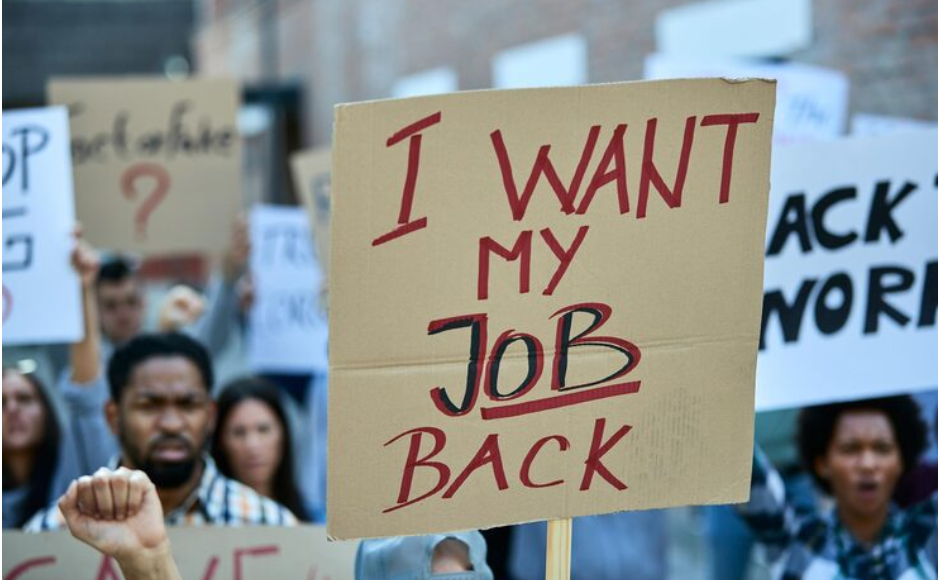
Earlier this year, American employers eliminated 92,000 jobs in a single month; this figure is even more bizarre given that economists had predicted a slight increase. During a nurses’ strike, the healthcare industry lost almost 28,000 jobs.
12,000 jobs were lost by factories, which have been laying off employees for 14 of the previous 15 months. Contracting businesses include restaurants, couriers, and administrative offices. The rate of unemployment increased slightly to 4.4%. When all the changes are finally made, the actual number might be worse.
Columbus becomes intriguing—possibly even significant—in this context. During a time when most of America was effectively in a hiring freeze, the city added about 10,000 jobs. A portion of this expansion came from industries that were already well-established in the area: Ohio State University, the biggest employer in the city, continued to grow its medical and research facilities.
Without much notice, Nationwide Insurance expanded its technology and analytics departments. JPMorgan Chase, which had been establishing a sizable tech hub presence in the metro, kept adding positions in operations and fintech. These stories aren’t particularly glamorous, but that’s part of the point.
With unsettling accuracy, Resume.org’s survey of over 1,000 business executives revealed the larger national narrative. Ten percent of businesses had put a complete hiring freeze in place. Four out of ten had staff reductions. Almost six out of ten predicted layoffs in 2026.
The causes were multifaceted, including declining revenue, tariff instability, economic uncertainty, and the growing use of AI, which was starting to replace jobs that previously required human labor. The most vulnerable were identified as high-paid employees and those without AI-related expertise. It depicts a workforce that is discreetly reorganized around an unclocking technology.
None of this is unique to Columbus. The use of AI is growing there as well, and some of the new positions being created are in fields like prompt engineering, AI compliance, and data ethics that lie at the nexus of human oversight and machine performance. It seems that city officials recognized early on that the question was not whether AI would arrive, but rather whether the local workforce would be able to adopt it rather than be replaced by it.
Technical retraining programs have been expanded by Columbus Community College. Despite being delayed by issues with federal subsidies, Intel’s planned semiconductor campus north of the city maintained enough momentum to support nearby hiring in skilled trades and logistics. It didn’t all happen in a straight line.
All of this was overshadowed by the national tariff situation. Trade policy, which changed erratically throughout 2025, genuinely unnerved businesses nationwide, making it nearly impossible to plan hiring eighteen months in advance. Employers in the manufacturing and retail sectors, particularly those that depend on imports, were forced to pay tariff costs that came in sooner than they could be passed on to consumers.
Jay Foreman, whose Boca Raton-based toy company Basic Fun produces Lincoln Logs and Care Bears, estimated that his tariff bill would more than double to $15 million in 2026. He still had plans to hire, but not by much. The majority weren’t very hopeful.
Columbus had an economy that was less vulnerable to the vagaries of international trade, at least in part.
Services, healthcare, education, and government-related technology are difficult to outsource and difficult to tariff. In order to prevent businesses from moving, Ohio’s state government purposefully invested in workforce development grants, broadband infrastructure, and incentive packages. It’s genuinely unclear if those choices will stand up during the upcoming economic cycle.
Calling Columbus a template is still premature. With good reason, economists are wary of that framing. The Federal Reserve is navigating a situation where inflationary pressures and weak hiring are occurring simultaneously, making both lowering and maintaining interest rates seem like the wrong course of action at the same time.
No city is exempt from that type of macroeconomic haze. The upcoming months will be more difficult for Columbus. However, the cranes are still moving in the midst of a nationwide hiring freeze that no one wanted to publicize.