 By Mari Hansen
 Last week, something changed in the memory market, first subtly and then dramatically. The price of Corsair’s VENGEANCE DDR5 kits, which had been steadfastly above $490 for weeks at Amazon US, has dropped to about $379.99. Newegg came next with comparable listings. It felt important to anyone who has been watching RAM prices the way some people watch weather radar—anxiously, obsessively, hoping for a break.
Perhaps not dramatic. but important. DDR5 RAM recently saw a significant price decrease for the first time in months following nearly a year of unrelenting price increases, and the causes of this decline go beyond a straightforward supply-and-demand adjustment.
| Category | Details |
|---|---|
| Topic | DDR5 RAM Market Pricing Trends |
| Segment | Consumer & Enterprise DRAM (Double Data Rate 5) |
| Key Manufacturers | Samsung, SK Hynix, Micron Technology |
| Market Control | Three major suppliers control approximately 70% of global DRAM output |
| Peak Price (32GB DDR5-6000 Kit) | ~$490 (late 2025 high) |
| Current Drop Price | ~$379.99 on Amazon US (Corsair Vengeance DDR5, 32GB) |
| Price at Mid-2025 | Under $95 for a 32GB DDR5-6000 kit |
| Price Catalyst (Drop) | Google’s TurboQuant KV cache compression algorithm |
| AI Demand Factor | Cloud giants projected to spend ~$400B on AI infrastructure |
| Memory Inventory Level (Q4 2025) | ~8 weeks (down from 31 weeks peak in early 2023) |
| HBM vs DDR5 Capacity Shift | Wafer capacity for HBM tripled vs conventional DRAM |
| Reference | Tom’s Hardware Memory Coverage |
| Impact on Other Storage | First simultaneous shortage of DRAM, NAND & HDD in ~30 years |
| Outlook | Market sentiment shifting; further price declines possible |
You must comprehend where we’ve been in order to comprehend where we are. Following the violent glut of 2022 and 2023, memory prices did something that almost no one anticipated: they skyrocketed in 2024 and 2025. By October, the price of a 32GB DDR5-6000 kit had increased from less than $95 in the middle of 2025 to about $184.
During the same period, the cost of DDR4 kits, the older standard that was expected to become less expensive as DDR5 developed, more than doubled. According to reports, memory quotes from Chinese suppliers were only good for one day before costs went up once more. There isn’t a market there. It’s a scramble.
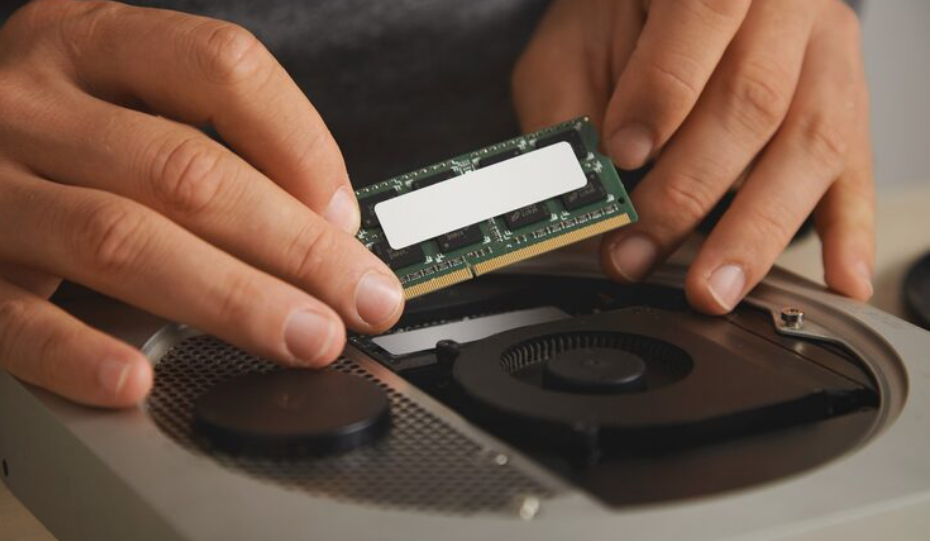
AI was the driving force behind all of this. In a very literal, warehouse-and-wafer sense, not in a nebulous, buzzword sense. Data centers required enormous amounts of memory quickly due to the explosion of large language model deployments and AI training clusters. The largest companies in the sector spent astounding amounts on cloud infrastructure.
High Bandwidth Memory, or HBM, the specialized chips that power AI accelerators like NVIDIA’s GPUs, is what manufacturers like Samsung, SK Hynix, and Micron, who collectively control about 70% of the DRAM market, were drawn toward by this demand.
Compared to traditional DRAM, the wafer capacity for HBM tripled. As a result, even though consumer demand for DDR5 and DDR4 chips was rebounding from years of decline, standard DDR5 and DDR4 production quietly tightened.
A sort of invisible squeeze was the outcome. By late 2025, inventory had decreased to about 8 weeks from its peak of 31 weeks in early 2023. Due to a shortage of chips, module manufacturers such as ADATA, Corsair, and Crucial temporarily halted new orders.
Open-market DDR prices spiked 25% in a single week as buyers panicked and placed double and triple orders after Samsung allegedly delayed Q4 contract quotes for several weeks. It felt like a slow-motion supply crisis that was picking up speed and becoming more difficult to manage.
TurboQuant followed. A KV cache compression algorithm that could potentially reduce AI memory requirements by up to six times without significantly degrading performance on long-context tasks was described in research published by Google in late 2025. Financial markets reacted quickly and harshly, causing hundreds of billions in market capitalization to vanish in a matter of days for Micron and other DRAM suppliers.
The reaction might have been exaggerated. The notion that TurboQuant marks the end of memory hunger in AI infrastructure has been refuted by a number of experts. However, markets don’t always wait for agreement. Investor confidence was shaken by the concern that AI’s desire for RAM might be exaggerated, which appears to have led to some inventory repositioning throughout the supply chain.
It’s difficult to ignore the fact that the price reductions are currently concentrated at particular vendors. The biggest cuts are being made to Corsair’s products; other brands haven’t changed as much. It’s worth observing that irregularity. It might indicate that this is a targeted inventory sell-off rather than a general market correction, with one company reducing its stock in response to TurboQuant’s uncertainty rather than a systemic easing of supply.
Alternatively, it might be the initial wave of something more significant. In any case, the price reduction for DDR5 RAM is genuine and important to actual people.
For a very long time, PC builders and gamers have been at a disadvantage in this market. Upgrading became more of a penalty than a choice when high-performance DDR5 kits began to hover around $450. A $100 drop alters the math, but it doesn’t make up for a year of suffering. It’s the kind of movement that makes a build seem feasible once more instead of perpetually postponed.
Caution is still warranted. The structural factors that increased prices—manufacturer pricing power, HBM reallocation, and the development of AI infrastructure—remain. Micron, Samsung, and SK Hynix are not suddenly overflowing with extra DDR5 capacity.
The squeeze may return more quickly than the current sentiment indicates if cloud spending continues and AI demand turns out to be more resilient than TurboQuant’s detractors fear. The current optimism is based in part on a single study that even its own authors seem surprised by, and the memory industry has a long history of dramatic reversals.
However, there seems to be a shift in the discourse, not only in terms of price but also in the underlying belief that RAM costs would only increase in one direction. At least momentarily, they have turned.
How quickly AI workloads adopt compression techniques, whether manufacturers maintain their pricing discipline or begin to compete again for consumer market share, and how much of the recent panic-buying has already distorted actual underlying demand are all factors that will determine whether that turn becomes a trend. If you’ve been waiting, the window is at least partially open for the time being. Compared to a month ago, that is more.