 By Mari Hansen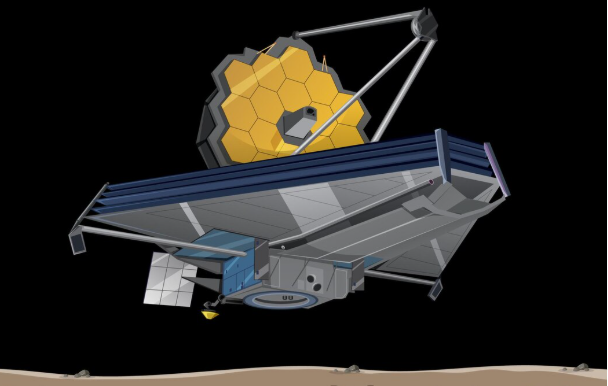
Imagine a piece of rock and ice that was quietly floating through interstellar space for a longer period of time than the Earth has existed. It was born somewhere in the early Milky Way, possibly ten billion years ago, long before our Sun existed. Then, last year, it makes a brief cosmic house call as it swings through our solar system. The most potent space telescope ever constructed points its mirrors at it and discovers something for which no one was quite ready.
Deuterium is being released by the object, known as 3I/ATLAS. Much of it. More than any known comet that astronomers have observed. There are more than anywhere else in our solar system. As it happens, one of the essential components for nuclear fusion is deuterium. The interesting part comes with that final detail. Additionally, this is where they become complex.
| 3I/ATLAS & James Webb Space Telescope — Key Facts | |
|---|---|
| Object Name | 3I/ATLAS — third known interstellar object to visit our solar system |
| Key Discovery | Unusually high deuterium (heavy hydrogen) concentration — a key nuclear fusion fuel component |
| D/H Ratio (Water) | Nearly 1% — more than 10× higher than in known comets within our solar system |
| Estimated Age | ~10–12 billion years (older than our Sun, formed in the early Milky Way) |
| Formation Temperature | ≲ 30 Kelvin (−405°F) — extremely cold protoplanetary disk environment |
| Observing Instrument | James Webb Space Telescope (JWST), near-infrared spectroscopy; first observation Aug 6, 2025 |
| Institutions Involved | NASA Goddard Space Flight Center, Jet Propulsion Laboratory, international research consortium |
| Notable Voice | Prof. Avi Loeb, Harvard — has raised (contested) hypothesis of possible technological origin |
| Papers Status | Submitted to Nature Astronomy and Nature (March 2026); pending peer review |
| Reference / Source | Space.com |
Deuterium is not a unique element. It is a stable, non-radioactive isotope of hydrogen that has an extra neutron in its nucleus, making it essentially a heavier form of the most prevalent element in the universe. It is dispersed throughout the universe and forms in great quantities during nuclear reactions. However, it can initiate a nuclear fusion reaction similar to the one that scientists have been attempting to use for clean energy for decades when combined with tritium, another hydrogen isotope.
Seawater on Earth contains about one deuterium atom for every 6,500 hydrogen atoms. The ratio is even lower in the majority of comets in our solar system. The deuterium-to-hydrogen ratio in water in 3I/ATLAS is almost 1%, which is more than ten times what astronomers usually see in comets. The enrichment is even more remarkable in methane molecules released by the object, which scientists have described as “exceedingly rare” in the detection of deuterated organic molecules from an interstellar source.
Drawing on near-infrared spectroscopy data collected by the James Webb Space Telescope during its observation of 3I/ATLAS in August 2025, two papers detailing the findings were submitted in March 2026, one to Nature Astronomy and the other to Nature. Scientists from NASA’s Goddard Space Flight Center and Jet Propulsion Laboratory, as well as a global network of partners, comprise the research teams.
They carefully conclude that the conditions under which 3I/ATLAS formed—temperatures at or below 30 Kelvin, or about -405 degrees Fahrenheit, inside a protoplanetary disk from a very different, very ancient solar system—are the most plausible explanation for the deuterium overabundance. “Thus, 3I/ATLAS formed in an environment very different from that in which our Sun and planets originated,” they state. According to their calculations, the object formed between 10 and 12 billion years ago, which means it is a preserved piece of early universe chemistry that existed long before the majority of today’s stars.
Perhaps this explanation is exactly correct. The cosmos is ancient, peculiar, and full of settings that result in chemistry we have never seen before. It is conceivable that a comet that was exposed to conditions much colder and less metal-rich than our own solar neighborhood for billions of years would have isotopic signatures that are unfamiliar to us. The idea that 3I/ATLAS is essentially a time capsule, carrying chemical fingerprints from a period in galactic history that we otherwise have no direct access to, is a source of genuine scientific excitement.
Then there’s Avi Loeb. Loeb, a Harvard astronomer, prolific writer, and sporadic scientific provocateur, has been keeping a close eye on 3I/ATLAS since it first surfaced. He had previously claimed that Oumuamua, an earlier interstellar object, exhibited unusual behavior consistent with extraterrestrial technology.
In a recent blog post, he cited both papers, pointed out that deuterium is fusion fuel, and asked whether the isotope’s overabundance might signal what he called a “technological signature.” His succinctness is either admirable or frustrating depending on your tolerance for conjecture. He didn’t go into detail. The theatricality of that move is difficult to ignore. Hanging in the air, a single question is doing a lot of work.
The authors of the papers offer a natural astrophysical explanation that requires no spacecraft at all, and the majority of researchers in the field continue to be skeptical of this line of thinking. The deuterium discovery is still lingering in the back of my mind.
Whether Loeb’s temperature constraints, which include the cosmic microwave background and the lowest temperatures that could have existed at the time of 3I/ATLAS’s formation, actually make the natural explanation more difficult to understand is still up for debate. It appears that other physicists disagree. However, it is at least worthwhile to watch the debate.
There is no doubt that 3I/ATLAS has already produced more scientific value than the majority of solar system objects. It has provided astronomers with a direct chemical sample from a distant planetary system that would not otherwise be accessible through a telescope.
There is a feeling that the object is exposing a galaxy that was already old and chemically complex long before life appeared on Earth when you watch the data come in, such as the methanol releases, the carbon dioxide coma, and now the deuterium. That is a big deal, regardless of what else it means.