 By Mari Hansen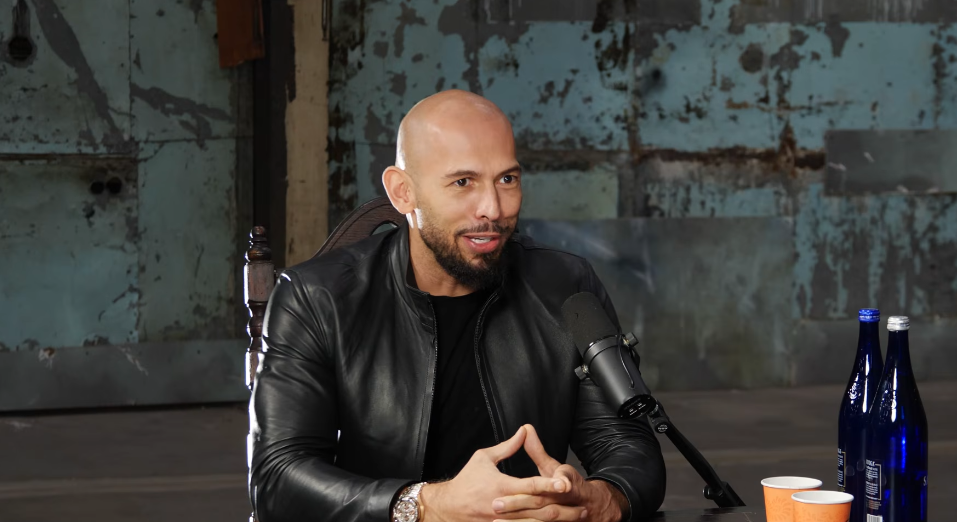
Once the algorithm determines that you’re ready, a specific type of video appears to follow you: quick cuts, opulent cars idling in the background, a voice speaking with complete certainty. Andrew Tate frequently has that voice. He doesn’t think twice. He doesn’t soften his voice. Perhaps that’s the point.
The man and the performance are difficult to distinguish. Tate didn’t come to the internet as a novice; he was a former kickboxing champion with a record that still commands quiet respect in the fighting community.
| Category | Details |
|---|---|
| Full Name | Emory Andrew Tate III |
| Known As | Andrew Tate / “Top G” |
| Born | December 1, 1986 |
| Age | 39 |
| Birthplace | Washington, D.C., USA |
| Nationality | American-British |
| Profession | Influencer, Businessman, Former Kickboxer |
| Known For | Social media influence, controversial views |
| Height | 1.91 m |
| Website | https://en.wikipedia.org/wiki/Andrew_Tate |
He arrived with an understanding of dominance—theatrical, psychological, and physical. When you watch videos of his past battles, you can see that he moves with a rhythm that is both aggressive and measured. His speech now has the same rhythm, as though the arena had just taken on a different form. The internet, however, is a different kind of ring.
His ascent in 2022 seemed abrupt, almost planned. Videos with the same themes—discipline, wealth, and control—were shared by thousands of accounts on TikTok at a rate that didn’t feel natural. This seemed to be more than just popularity. Distribution was what it was. He was amplified by a system operating in the background until it became challenging to ignore him.
However, things begin to break down in the message itself. Tate candidly characterizes himself in ways that would typically put an end to a career. However, his audience increased rather than decreased.
That paradox persists. Even when it is offensive, some viewers might find the bluntness to be more “real” than polished, corporate messaging. Even when it crosses boundaries that many find unacceptable, Tate’s refusal to filter himself reads as authenticity in a media landscape full of meticulous wording.
The environment is also important. Cars, watches, and space are all purposefully included in the frames of videos shot in Dubai or Bucharest. Wealth is staged rather than merely mentioned. A sports car door remains open, giving the impression that someone has just stepped out, while palm trees outside one villa clip sway slightly. Although it’s a minor detail, it perpetuates the idea of continuous success and movement.
However, the narrative loses stability behind that image. He has been the subject of legal investigations in several nations, involving grave accusations that he and his brother refute.
Influencers are not typically found in courtrooms, police statements, or court filings. There’s a different kind of tension when you watch him enter a courtroom while the cameras are clicking. The surroundings push back in ways that a social feed never does, but the confidence persists.
The extent to which this impacts his audience is still unknown. If anything, some followers appear to become more devoted as a result of controversy, using criticism as evidence of persecution. It’s not a novel dynamic. Similar cycles have been employed by leaders in a variety of fields, including politics, entertainment, and even technology. However, Tate moves at a pace that seems particularly connected to the internet, where stories change every hour.
Additionally, there is the business side, which is more subdued but perhaps more illuminating. Financial independence outside of conventional systems was promised by platforms such as Hustler’s University and subsequent endeavors.
Community, a sense of belonging, and access to strategies are all available for a monthly fee. It’s possible that identity is being sold instead of just financial advice. a means of moving differently from everyone else and perceiving oneself as a member of a select group. Younger audiences are most affected by that appeal.
Teachers and parents are now concerned about his influence in classrooms and online forums. His ideas seem to spread more quickly than context, reaching teenagers before they have the means to challenge them. However, it seems too easy to reject his appeal completely. Even though his solutions are debatable, the frustrations he appeals to—financial strain, changing gender roles, and future uncertainty—are genuine.
There’s a mixture of curiosity and uneasiness as you watch this happen. Tate is a part of a larger change in the way influence operates, not just an individual. Institutions no longer bestow authority. It is asserted, executed, and strengthened by focus. Furthermore, in this system, attention hardly ever considers whether it is positive or negative.
It’s hard to predict what will happen next. In addition to platform choices, audience behavior, and the ongoing influx of new personalities into the same space, legal outcomes will also be significant. Tate has already demonstrated flexibility by changing platforms, rebranding initiatives, and adjusting tone as needed.
There’s a feeling that the model he represents won’t go away even if his notoriety shifts. Another person will enter the same framework, employ the same techniques, and address the same group of people.
And that may be the more unsettling aspect of the narrative.