 By Mari Hansen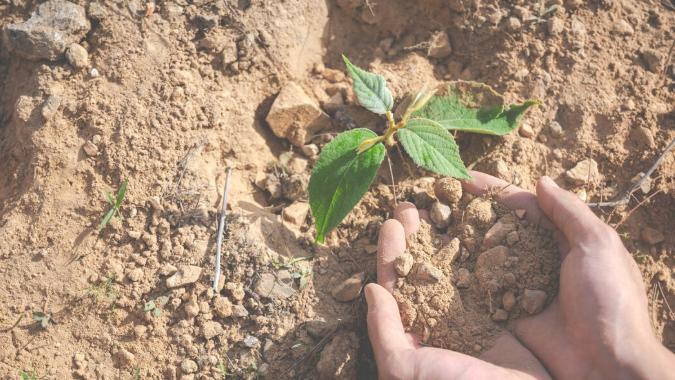
At first glance, the soil appears normal. When pressed between fingers, it clumps slightly and is dry in some areas and darker in others. However, a farmer on a farm outside of Des Moines crouches down and points to what he refers to as “life,” brushing aside a layer of cover crops. Tiny roots, moisture held longer than expected, the faint smell of something organic rebuilding itself.
For many years, agriculture—field plowing, carbon emissions, and nutrient depletion—was seen as contributing to climate change. The tone has changed now. A set of techniques aimed at restoring soil health, known as regenerative agriculture, is being presented as a possible remedy. Something more significant, not a side project. Maybe even central.
| Category | Details |
|---|---|
| Topic | Regenerative Agriculture & Climate Change |
| Focus | Soil Carbon Sequestration |
| Key Practices | No-till farming, cover crops, crop rotation, agroforestry |
| Climate Potential | Up to 23 gigatons CO₂ sequestered by 2050 |
| Global Challenge | 90% of soils could degrade by 2050 |
| Industry Impact | Agriculture contributes ~30–40% of emissions |
| Benefits | Improved soil health, water retention, biodiversity |
| Key Risk | Scaling challenges, uncertain long-term impact |
| Stakeholders | Farmers, governments, climate investors |
| Reference | https://www.weforum.org/ |
The assertion is remarkable, at least in theory. Farmers could remove substantial amounts of carbon dioxide from the atmosphere by enhancing soil and raising its carbon content. According to some estimates, by the middle of the century, improved soil management could sequester up to 23 gigatons of CO2. That is not insignificant. It’s the type of number that arouses suspicion as well as optimism.
The changes are noticeable but subtle when strolling through fields that have embraced regenerative practices. Rather than repeating, crops rotate. Rarely is the soil exposed; it remains covered. There are fewer chemicals sprayed and less machinery shaking the ground. The land appears to be more serene. more complex. Resilience is a term used by farmers to describe fields that retain water longer during droughts and produce consistent yields when the weather becomes unpredictable.
However, it seems like the enthusiasm is outpacing the evidence by a small margin. Scientists concur that soil has the capacity to store carbon, but determining the amount and duration of this storage is challenging. If practices shift or the equilibrium is upset by extreme weather, carbon may seep back into the atmosphere. Whether widespread adoption would have the kind of effect proponents claim is still up for debate.
The issue of scale is another. When regenerative agriculture is adapted to local conditions—soil type, climate, and crops—it performs best. What works in Iowa might not translate well to South Asia or sub-Saharan Africa, where farmers face different challenges. It would take patience, money, and training in addition to expertise to spread these methods throughout the world. Furthermore, climate markets are not known for their patience.
Investors have been considering “carbon farming” in recent years, looking into ways to convert soil carbon into tradable credits. Paying farmers to store carbon and creating a financial incentive for improved land management makes sense. However, it seems like the system is still being developed as it operates when observing the early pilot programs.
Verification is a messy process. Different standards apply. Additionally, it makes sense that farmers are wary of staking their livelihoods on markets that seem experimental.
Additionally, there is a recollection of earlier agricultural promises—green revolutions, biotech innovations—that yielded inconsistent outcomes. The tone of regenerative agriculture is different; it is less about technology and more about going back to traditional techniques, which are frequently based on indigenous customs. That lends it some legitimacy. It also begs the question of why these methods were initially dropped. Mostly efficiency. Yield. Scale.
Billions of people are fed by modern, output-oriented agriculture, which frequently deteriorates the very soil it depends on. In contrast, regenerative farming requires a different balance—more restoration, less extraction. It can be more difficult to manage and take longer to show results, but it’s not always less productive.
Furthermore, global supply chains don’t always accommodate complexity.
There is a mixture of conviction and reluctance when farmers use these techniques. Some speak quietly confidently about healthier crops and eventually cheaper input costs. Some cautiously experiment, converting a portion of their land while maintaining the status quo on the remainder. In the dramatic sense, it’s not a revolution. It’s more like a slow, uneven shift that’s still getting its bearings.
The discussion is made more urgent by climate change. One of the industries most susceptible to the effects of emissions, such as droughts, floods, and erratic seasons, is agriculture. Regenerative techniques provide a kind of insurance by enhancing soil health and water retention. Not only against climate change, but also against the instability it causes.
The concept is appealing because of its dual role of adaptation and mitigation. However, the more important question still stands. Is it possible for dirt alone to significantly change the course of global warming? Or is this one piece of a much bigger picture being elevated because it seems real, grounded, and almost poetic?
The notion that the answer is right under our feet has a certain allure. that the solution to a global crisis may lie in something as insignificant as soil. It makes an issue that frequently seems overwhelming simpler.
As this develops, there is both caution and hope. The fields are evolving. The vocabulary surrounding farming is changing. However, it’s still unclear if this movement can grow quickly enough and fulfill its promises.
Something is being done by the dirt. That much seems obvious. It’s still unclear if it’s sufficient.