 By Mari Hansen
 It was an ordinary Tuesday afternoon in early April, when most people are sitting in traffic or staring at laptops. The sky over the northeastern United States suddenly began to light up. It was being crossed by a swift, bright object that could not be mistaken for a weather balloon or a plane.
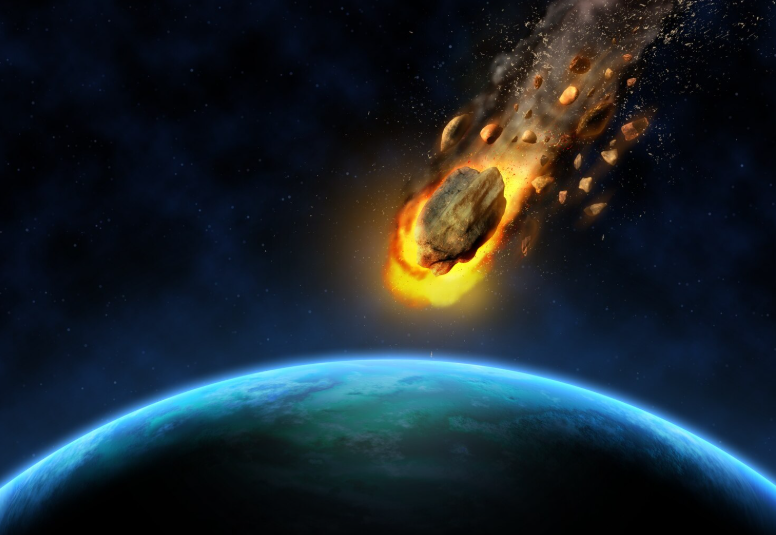
It was perfectly captured in dashcam footage from New Jersey and New York: a sliver of intense light trailing a lengthening tail that curved slightly with the shape of the Earth before completely disappearing. In a matter of days, NASA verified the suspicions of thousands of shocked witnesses. The meteor was a fireball.
| Category | Details |
|---|---|
| Event | Daytime Fireball Meteor Sighting |
| Date & Time | April 7, 2026 — 2:34 PM EDT |
| First Visible Altitude | 48 miles above the Atlantic Ocean near Long Island, NY |
| Speed | 30,000 miles per hour |
| Direction of Travel | Southwest |
| Distance Covered | Approximately 117 miles |
| Disintegration Point | 27 miles above Galloway, New Jersey (just north of Atlantic City) |
| States with Witnesses | Connecticut, Delaware, New Jersey, New York, Pennsylvania |
| Confirmed By | NASA |
| Peak Fireball Season | February through April — sightings increase 10–30% |
| Nature of Object | Space rock / meteor (bolide class) |
| Threat to Ground | None — disintegrated fully in Earth’s atmosphere |
The object was moving southwest at about 30,000 miles per hour when it was first seen, according to the agency, about 48 miles above the Atlantic Ocean close to Long Island. It’s a difficult number to register. A commercial jet, on the other hand, cruises at roughly 575 miles per hour. Before it broke apart 27 miles above Galloway, New Jersey, this space rock traveled about 117 miles at a speed of more than fifty times.
The entire event took place in a matter of seconds. The American Meteor Society received reports of sightings from witnesses in five states: Connecticut, Delaware, New Jersey, New York, and Pennsylvania. The organization’s records have grown in importance as a means of tracking these occurrences.
It’s possible that the majority of people believe fireball sightings are extremely uncommon, occurring only once every generation if you’re lucky. To be honest, the reality is more intricate and fascinating. According to NASA, there is a specific fireball season that lasts roughly from February to April. During this time, reports of sightings can increase by ten to thirty percent. Why? The agency is still unsure.
During this period of the year, Earth’s orbit passes through denser debris fields, according to one working theory. The fact that there are simply more cameras than ever before—doorbell cameras, dashcams, security systems—silently observing skies that were previously unnoticed is another, possibly more realistic explanation.
Fifty years ago, the fireball on April 7 might not have made national headlines. It was photographed today from several perspectives before it had even finished falling.
Behind the spectacle, a larger scientific narrative is developing here. Researchers who examine these occurrences are doing more than simply cataloging light displays. Researchers sort through millions of individual meteor observations using global networks of all-sky cameras placed throughout Canada, Japan, California, and Europe in search of patterns—clusters of similar objects moving in similar directions, suggesting a shared origin.
A cluster of 282 meteors following an extreme orbit that brings them nearly five times closer to the Sun than Earth ever gets was discovered during one such search, according to a study published in March 2026.
These pieces appear to have come from a rocky asteroid being gradually destroyed by solar heat, cracked, baked, and crumbling piece by piece, based on how they break apart as they enter the atmosphere. Even from a distance, witnessing such a discovery gives you a new perspective on the true meaning of these fleeting streaks of light.
Comets, icy wanderers from the outer solar system that scatter dust and debris as they swing close to the Sun, are the source of the majority of the material that falls into Earth’s atmosphere every day. Asteroids are an entirely different matter.
They are rocky, dry, and formed in the inner solar system; unlike comets, they do not naturally shed material. When an asteroid does become “active”—releasing gas or dust or disintegrating—it typically indicates that something important has occurred. A collision, heat stress, spinning too quickly, and flying apart.
The most well-known example is the asteroid 3200 Phaethon, which is the parent body of the December Geminid meteor shower. It released massive amounts of material during previous close encounters with the Sun, dispersing debris throughout its whole orbit. Each Geminid we encounter is a minuscule fragment of Phaethon, continuing to travel through space along its ancient route.
The April sighting is a tiny, obvious reminder that the solar system is not static or neat, and it fits into this larger pattern in a human way. Sometimes Earth passes directly through streams of debris from sun-scorched asteroids and old comets that drift through space.
Before it came to a brief, brilliant end 27 miles above the Jersey Shore, the meteor that passed over New Jersey was most likely a fragment that had been traveling for thousands of years.
The peculiar intimacy of that is difficult to ignore. Something that old, going that far, culminating in the sky above Garden State Parkway commuters on a Tuesday afternoon. No harm. No effect. Just a few dashcam videos that will likely go viral online for years, followed by nothing at all.