 By Mari Hansen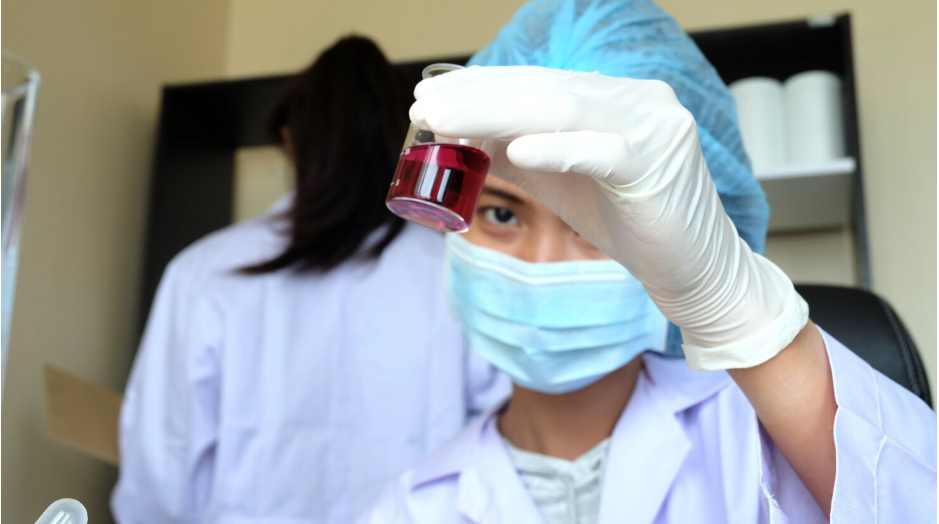
When you first read the headline, there’s a moment when your brain rejects it. plastic. in the blood. Not in a seabird’s stomach, not in the sediment of the ocean, not floating on the surface of some far-off Arctic lake, but inside a human being, flowing through veins, circulating with each heartbeat. It has a science fiction vibe. It isn’t. Researchers at Vrije Universiteit Amsterdam examined blood samples from 22 healthy adults and discovered microplastic particles in 17 of them in a study that merits much greater public attention than it has. That’s about 77%.
There were no illnesses in the study. Nobody lived close to a waste site or worked in a chemical plant. They were regular people, and traces of the same material used to make carrier bags, food packaging, and drink bottles were found in their blood. With an average concentration of 4.2 particles per milliliter of blood, a different study conducted in South Korea with 36 participants increased that detection rate to almost 89%. PET, or polyethylene terephthalate, the material in your water bottle—possibly the one on your desk right now—was the most frequently discovered type of plastic.
| Topic Overview: Microplastics in Human Blood | |
|---|---|
| Discovery Year | 2022 (first confirmed detection in human blood) |
| Lead Researcher | Prof. Dick Vethaak, Vrije Universiteit Amsterdam |
| Study Published In | Environment International |
| Sample Size | 22 anonymous healthy adult donors |
| Detection Rate | 77–88.9% of participants tested positive |
| Plastics Identified | PET, polystyrene, polyethylene, polypropylene |
| Average Concentration | ~1.6–4.2 microplastic particles per mL of blood |
| Funding Bodies | Dutch National Organisation for Health Research; Common Seas |
| Key Health Concerns | Cellular damage, blood coagulation disruption, cardiovascular risk, organ infiltration |
| Reference Website | Environment International – Elsevier |
Approximately one-third of the samples contained polystyrene. In about a quarter, polyethylene, which is used to make grocery sacks and bin bags, emerged. It’s worth taking a moment to consider that. Something is being left behind inside of us by the same throwaway items that line grocery store shelves, which we grab mindlessly and discard carelessly. Not a recollection. A molecule. a particle. Ecotoxicologist Prof. Dick Vethaak, who oversaw the Dutch study, described it as “a breakthrough result” but advised caution. Nearly every statement made by scientists on this topic reflects this tension between the importance of what was discovered and the ambiguity surrounding its meaning.
“He stated bluntly, “The particles are present and are moved throughout the body. He was unable to say where they would go from there just yet. if they manage to get past the blood-brain barrier. if they become lodged in organs. Whether the levels discovered are sufficient to cause illness or if they are merely bystanders in a system that hasn’t been strained enough to reveal its harm. However, what is already known is unnerving. Human cells can be harmed by microplastics, according to lab research. According to a different study, the particles can adhere to red blood cells’ outer membranes, which may reduce their capacity to carry oxygen.
They have been discovered in pregnant women’s placentas, which is a significant finding in and of itself. The particles entered the fetuses’ hearts, brains, and other organs straight from the lungs in pregnant rats. According to Vethaak, infants who are fed plastic bottles ingest millions of microplastic particles every day. Microplastic concentrations in infant feces have been found to be ten times higher than those in adult feces.
More of this is being absorbed by children’s bodies than by anyone else because they are still growing and developing their immune and neurological systems. Another dimension was added by the South Korean study. Researchers discovered that individuals with higher blood microplastic concentrations—defined as three or more particles per milliliter—exhibited notable alterations in coagulation markers. There was an increase in fibrinogen levels. C-reactive protein, a sign of inflammation, was also elevated. There was a disruption in the activated partial prothrombin time. These readings are not abstract.
In a world where cardiovascular disease is already a major cause of death, the idea that widespread plastic exposure may be subtly changing circulatory function is, at the very least, something that requires careful consideration. They describe changes in the way blood clots. In patients who subsequently experienced heart attacks or strokes, a more recent study discovered microplastics embedded in arterial plaque. Although the pattern persists, correlation does not imply causation. It’s difficult to ignore the fact that this discussion, which is urgent in scientific journals and discussed at international health conferences, hasn’t quite gained the traction it might have. By 2040, plastic production is predicted to double. There is no discernible human timeframe in which the particles deteriorate. They fragment into ever-tinier pieces until they reach nanoscale sizes, which allow them to enter tissues that are inaccessible to larger particles. There is no decrease in exposure.
It’s actually speeding up. “Blood links all the organs of our body and if plastic is there, it could be anywhere in us,” stated Dr. Fay Couceiro, an environmental pollution specialist at the University of Portsmouth, in what may be the most straightforward explanation of the current situation. It’s not alarmism. Anatomy is that. The circulatory system just moves substances; it doesn’t distinguish between them. Everything is affected by what gets to the blood. All of this has an odd intimacy to it. The plastic isn’t out there, in some far-off ecosystem that we’ve decided to feel bad about and take minimal action to safeguard. This is where it is. It has already penetrated every barrier that could have shielded us, including the skin, the placenta, the lining of our stomachs, and the tissue of our lungs. The question of whether it is actually harmful at the current concentrations is still unanswered.
However, scientists who have dedicated their careers to studying toxicology and human health are not discounting the issue. They are requesting larger studies, quicker timelines, and more funding. The EU has allocated funds for research. A group of scientists and non-governmental organizations requested £15 million from the UK government to conduct an investigation. Those who believe the story ends here do not act in this way. It will take years to put the whole picture together. That’s just the methodical, slow, and sometimes frustrating pace of science. However, the first piece has been positioned and is clearly visible. Our blood contains microplastics. They are passing through us. And the question of what that means is just getting started.