 By Mari Hansen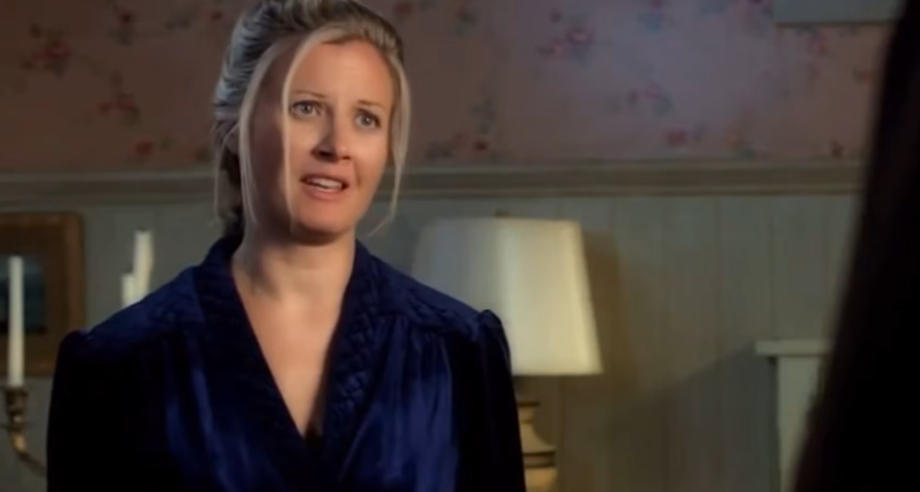
There are actors whose names are prominently displayed alongside headlines and box office receipts. Actors like Carrie Anne Fleming, on the other hand, have a more subdued, almost familiar presence that makes you feel as though you’ve known them for years before you even realize it.
Her death at age 51, following complications from breast cancer, has a peculiar stillness to it, the kind that settles rather than erupts. slowly. steadfastly.
| Category | Details |
|---|---|
| Full Name | Carrie Anne Fleming |
| Profession | Actress |
| Born | August 16, 1974, Digby, Nova Scotia, Canada |
| Died | February 26, 2026, Sidney, British Columbia, Canada |
| Age | 51 |
| Known For | Supernatural, iZombie, Masters of Horror |
| Education | Kaleidoscope Theatre, Kidco Theatre Dance Company |
| Career Span | Over 30 years in film, TV, and theatre |
| Notable Role | Karen Singer (Supernatural), Candy Baker (iZombie) |
| Reference | https://www.imdb.com/name/nm0281619/ |
It’s probable that many people were unaware of her name right away. However, they were familiar with her face. The kind that enters a scene and gently modifies its rhythm, grounding it without drawing attention to itself. It’s clear from watching her work that she grasped a crucial aspect of performance: knowing when to hold back.
Fleming was born in Nova Scotia and grew up in British Columbia, so it wasn’t an easy journey for him to become an actor. It happened piecemeal: training in theater, taking on smaller parts, and developing a career that was more about steady accumulation than big breakthroughs. That trajectory now seems almost archaic.
These actors become part of the ecosystem on television sets, particularly in long-running series like Supernatural. Deeply essential, but not always central. Despite only appearing in a few episodes, Fleming’s portrayal of Karen Singer carried an emotional weight that lasted longer than anticipated.
It’s difficult to ignore how frequently actors who aren’t attempting to control a scene produce those moments.
Her laugh is a detail that keeps coming up in memories. It was easy, generous, and effortlessly filled a room, according to co-stars. It implies a person who didn’t have to keep up a persona after the cameras stopped rolling and wasn’t performing off-camera.
She also portrayed Candy Baker in iZombie. a different tone that is still layered but appears lighter. She appeared to switch between genres—drama, comedy, and horror—with ease and without making any notice. Despite being frequently disregarded, her adaptability speaks volumes about her craft. Adapting without drawing attention to it is a subtle skill.
It feels important that she performed in theater in British Columbia as part of her career. A different kind of presence—one that is less forgiving and more immediate—is required for stage acting. Returning to areas where the audience is seated just a few feet away and observing every move suggests that she valued the process just as much as the result.
It’s still unclear if she intentionally balanced stage and screen or if it was just where the work led her. In any case, it molded a career that is less linear and more textured.
As we watch this play out, it’s clear that actors like Fleming are treated differently by the industry than its more well-known stars. Though more subdued, the tributes are sincere. more intimate. less intensified. However, they seem more genuine in certain aspects.
Co-stars remembering little things. Jokes were exchanged. discussions in between takes. These particulars are important.
Her death, which followed a fight with cancer, adds another layer that is hard to fully understand. Time is frequently compressed and priorities are changed by illness. It seems like a lot of that struggle takes place behind closed doors, particularly for actors who aren’t in the spotlight all the time.
Pieces of performances that are still present and unaltered. A scene in a darkened room. A restrained line. A look that conveys more than the script calls for. When these moments are captured on screen, they produce a sense of permanence that is both reassuring and lacking. Additionally, there is a more general pattern here.
A different kind of legacy has been left by the television environment she worked in, which included genre shows, enduring series, and interconnected fan communities. Recognition is a better metric than awards or headlines. in the manner that fans recall particular lines or scenes years later. That pattern is consistent with Fleming’s work.
Her career seems to reflect something about the industry as a whole—how much it depends on those who don’t always get the most attention but whose contributions keep everything together. the supporting roles that aren’t actually helpful at all.
Now that I am aware of the background, her performances seem a little different. Not in a big way. Just enough to be noticeable. A pause seems to last longer. A line has a heavier feel.
Perhaps that is the long-term impact. It was a slow realization rather than an abrupt absence. That person who was constantly present—in the background, on screen, influencing events—will no longer be.