 By Mari Hansen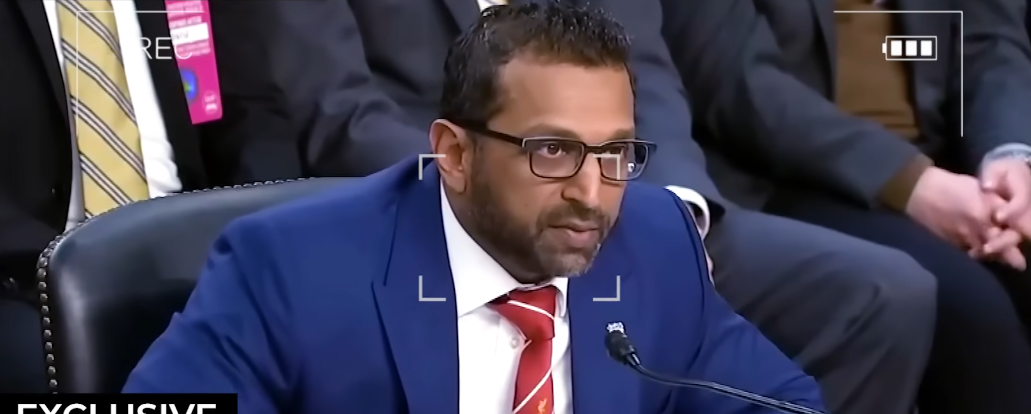
The story of Kashyap Pramod Patel, a young man who spent his summers caddying at a Long Island country club and observing defense attorneys in polo shirts, has an almost cinematic quality. It seems that Patel decided that law was his calling right there on the green. That seemingly insignificant detail reveals something about his work style. Kash Patel has always been observing, putting things away, and biding his time. He now oversees the FBI.
By all standards, his family’s tale is remarkable. His father, Pramod, was one of the Gujarati Indians that Idi Amin drove out of Uganda in 1972. This was one of the more brutal instances of ethnic cleansing in history, and it is frequently overlooked in Western political memory.
| Category | Details |
|---|---|
| Full Name | Kashyap Pramod Patel |
| Date of Birth | February 25, 1980 |
| Place of Birth | Garden City, New York, USA |
| Ethnicity/Heritage | Gujarati Indian-Ugandan American |
| Religion | Hindu |
| Education | University of Richmond (B.A., 2002); University College London (International Law Certificate); Pace University School of Law (J.D., 2005) |
| Current Position | Director, Federal Bureau of Investigation (2025–present) |
| Previous Roles | Acting Director, ATF (Feb–Apr 2025); Chief of Staff to Acting SecDef; Deputy Director of National Intelligence |
| Political Affiliation | Republican; Trump loyalist |
| Notable Work | Primary author of the Nunes memo; Board member, Trump Media & Technology Group |
| Foundation | The Kash Foundation (legal aid for January 6 defendants) |
| Historic Distinction | First person of South Asian descent to serve as FBI Director |
| Reference | FBI Official Website |
Before arriving in Canada and subsequently the United States, the Patels applied for asylum in a number of nations. Either extreme caution or ferocious determination are typically the results of that kind of displacement. It appears to have produced both in Patel’s case.
After graduating from the University of Richmond in 2002, he went on to Pace University to obtain his law degree. He started out as a public defender in Miami-Dade County, handling cases involving violent crime and drug trafficking, rather than as a government insider or political operative. It’s worth taking a moment to consider that.
The man who is currently in charge of an organization that his detractors claim has been used as a weapon against political rivals once argued in court on behalf of those the government wished to imprison. One of the more intriguing unanswered questions about him is whether that influences his worldview in ways that make him truly reform-minded or if it’s just biographical texture he uses when it suits him.
On the surface, his tenure at the Department of Justice from 2012 to 2017 was largely unremarkable; he worked in counterterrorism, coordinated arrest warrants, and briefly served in the National Security Division. However, there were indications of friction. He once flew in from Tajikistan, showed up at a chambers meeting in unprofessional attire, and was dismissed from the room by a federal judge in Texas.
Some of his claims regarding his involvement in high-profile prosecutions have been subtly contested by former colleagues. It’s challenging to interpret these moments precisely. They might point to a man who exaggerates his qualifications or just someone whose ambition sometimes surpasses his situation.
For him, everything was altered by the Nunes memo. As an assistant to Representative Devin Nunes, Patel joined the House Permanent Select Committee on Intelligence in 2017. According to reports, he was the main author of a document accusing FBI officials of misusing their surveillance powers while looking into connections between Trump associates and Russia.
The memo caused immediate controversy; intelligence officials cautioned that its release could jeopardize sources and methods, while Democrats described it as a dangerous distortion. However, some of the memo was somewhat validated by subsequent reporting, such as an inspector general report from 2019 that found significant mistakes in FBI FISA applications. Patel’s popularity among Trump supporters increased dramatically and hasn’t really decreased since.
During Trump’s first term, he quickly rose through the ranks of the national security apparatus, becoming chief of staff to acting defense secretary Christopher Miller, acting deputy director of national intelligence, and member of the National Security Council. After that, Trump lost the 2020 election. However, Patel would contend that something else occurred in 2020, placing him firmly among those who have never come to terms with Biden’s win.
His sympathies on this issue are fairly obvious given that he founded The Kash Foundation, which raised funds to assist defendants from the January 6 Capitol attack with their legal expenses. Democrats have accused him of being a member of QAnon, a charge that seems to speak more about the divisive environment in which he lives than it does about any particular, verifiable affiliation.
When Christopher Wray announced his resignation in late 2024, Trump took swift action. Patel was put forward to head the FBI. Senators questioned his loyalty, his record, and his public remarks about removing political opponents from federal agencies during his Senate confirmation hearing in January 2025, which was just as contentious as anyone could have predicted. After being confirmed in February, he became the bureau’s first person of South Asian ancestry to hold the director’s position. Regardless of one’s political views, that is a real milestone that merits recognition despite all the commotion.
Then, in late March 2025, an odd and embarrassing event occurred. Patel’s personal Gmail account was allegedly compromised by Handala, an Iranian hacktivist organization associated with the Islamic Revolutionary Guard Corps. Along with a sample of old emails from 2010 to 2019, they released pictures of Patel holding a cigar and standing close to a private jet.
Originally shared by a media outlet in 2022, a dance video that went viral on social media and was mistakenly attributed to Patel actually showed an Indian man celebrating his wife’s temporary departure. Before fact-checkers discovered it, the fake video received millions of views on X, Facebook, TikTok, and Instagram. The FBI acknowledged that there was a breach, but pointed out that the data was historical and did not include any official government information.
Uncomfortable questions were brought up by the episode. It’s more about the discrepancy between the FBI’s own director’s personal digital hygiene and the institutional security it requires of others than it is about Patel’s character (old personal emails and a cigar photo don’t add up to much).
Experts in cybersecurity were direct about it. High-profile people continue to be prime targets, and standard consumer email protections are rarely effective against state-sponsored actors, according to one industry executive. This might have been a legacy vulnerability from a 2024 breach. It’s the kind of moment that lingers, though.
According to Patel, the FBI has turned against conservatives. He has stated it honestly, repeatedly, and without much hesitation. He wants the bureau’s use of its surveillance powers to be significantly reformed.
It’s still genuinely unclear how his tenure will be evaluated, and whether he is the right person to solve the issue and whether he is correct about it are two completely different questions. His supporters believe that he is at last bringing an outsider with genuine conviction into a structure that has long shielded itself from responsibility. His detractors perceive him as someone whose allegiance to a single man is more dependable than his adherence to the law.
As is often the case, the truth resides somewhere more nuanced than either version. It is undeniable that Kash Patel, a former public defender, memo writer, Trump supporter, history-maker, and son of a refugee banished by a dictator, now leads one of the world’s most potent law enforcement organizations. The Garden City caddie made it all the way inside. It truly remains to be seen if he demolishes the building or constructs something better.