 By Mari Hansen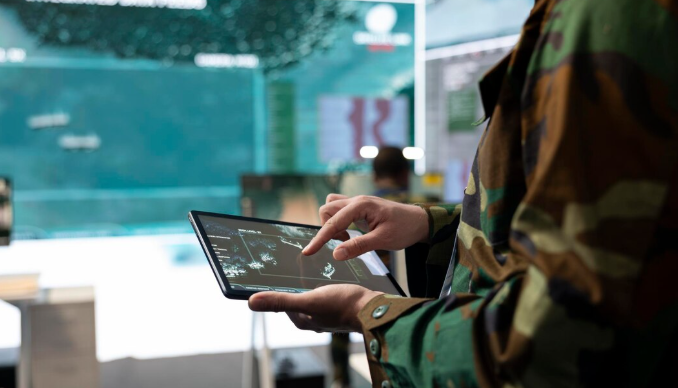
Engineers in a San Francisco office with glass walls are surrounded by screens that display data models and code. It appears to be in a relaxed, almost everyday mood. However, the disputes that are taking place in internal emails and Slack channels paint a different picture. Silicon Valley is grappling with an uncomfortably big question: how far should artificial intelligence be used in combat? This question lies somewhere between software development and national security.
The actual technology is developing swiftly. In order to analyze satellite imagery, identify trends in battlefield intelligence, and forecast troop movements, military planners are depending more and more on AI systems.
| Category | Details |
|---|---|
| Topic | Artificial Intelligence in Military Strategy |
| Key Actors | U.S. Department of Defense, Google, OpenAI, Anthropic, Palantir |
| Main Debate | Use of AI for surveillance and autonomous weapons |
| Industry Concern | Lack of human oversight in AI-driven targeting |
| Employee Activism | Hundreds of tech workers petitioning companies over military AI use |
| Major Contract Example | Pentagon AI contracts worth hundreds of millions |
| Controversial Systems | Autonomous drones, AI targeting tools, intelligence analysis systems |
| Ethical Issue | Whether machines should make lethal decisions |
| Broader Trend | Increasing integration of AI in national security operations |
| Reference | https://www.rand.org |
Drones, radar signals, and intercepted communications are just a few examples of the massive streams of information that algorithms can sort through more quickly than any analyst spending the night in a command center. Theoretically, that speed can help commanders make decisions sooner, saving lives. In actuality, it also brings up the disturbing prospect that machines will soon have a say in who lives and who dies.
The argument is no longer merely theoretical within tech companies.
More than 100 Google workers who are developing cutting-edge AI systems wrote to senior management earlier this year to voice their concerns about possible Pentagon collaborations. Their message was unexpectedly straightforward. They requested that the business establish what they referred to as “red lines”—unambiguous restrictions on the military’s use of its AI tools. Autonomous weapons that could function without human intervention and surveillance systems that target civilians were among the issues.
It seems from reading the letter that many engineers are worried about losing control over what their code might become in the future, rather than national defense per se.
It’s not a brand-new tension. In 2018, Google employees famously protested the company’s participation in Project Maven, a Pentagon initiative that employed artificial intelligence to analyze drone footage. Google eventually withdrew from the project due to the backlash. Silicon Valley appeared to have made the decision to stay away from military applications for a while.
However, things changed rapidly. Similar to satellite networks or nuclear technology in previous decades, governments now view artificial intelligence as a strategic asset.
Openly discussing “decision speed” and “cognitive advantage,” military strategists contend that artificial intelligence (AI) has the potential to shorten the time it takes to identify threats and take appropriate action. The argument goes that if one nation’s systems are able to process intelligence more quickly than another’s, it may take control of the battlefield before the other side fully comprehends what is going on.
Companies like Palantir have been drawn further into defense work by this reasoning. Intelligence agencies frequently use Palantir’s software, which combines data from various sources and aids analysts in finding patterns in challenging situations. Advocates claim that these tools help soldiers make better choices and prevent needless deaths. Algorithms may subtly influence those choices in ways that humans may not fully comprehend, according to critics.
It’s difficult to ignore the cultural conflict between Silicon Valley and the Pentagon as this debate develops.
The world in which the military works is one of national priorities, hierarchy, and secrecy. Theoretically, tech culture is more open and experimental. Friction is almost instantaneous when those worlds meet. Engineers used to creating products for billions of users are suddenly faced with scenarios involving lethal force, surveillance systems, and missiles.
Many researchers say they are at ease with AI supporting cybersecurity or military logistics, fields where software can protect networks or manage supply chains. When AI enters the realm of autonomous decision-making, hesitancy typically starts. Many engineers are clearly uncomfortable with systems that control drones without human supervision, recommend targets, or create battlefield strategies.
This hesitancy might be a reflection of a deeper anxiety about technology deviating from its intended purpose.
There are many examples from history. Originally designed for scientific computations, early computer systems later developed into financial trading algorithms that could transfer billions of dollars in milliseconds. Social media sites started out as means of communication before changing public opinion and politics. It’s possible that artificial intelligence will develop similarly, surpassing the initial vision of its creators.
China, the US, and a number of European nations are making significant investments in defense systems powered by AI. According to military strategists, machine intelligence may provide soldiers with “cognitive overmatch,” or the capacity to process information from the battlefield more quickly than an enemy. Theoretically, while traversing uncharted territory, a soldier donning a headset connected to AI analysis could get real-time translations, threat alerts, and tactical recommendations.
When observing these systems in action, the technology is both amazing and a little unnerving.
There is a sense that software engineers may be just as important to the future of warfare as generals. Eventually, decisions made on an active battlefield thousands of miles away could be influenced by lines of code written in quiet offices. And the atmosphere in Silicon Valley seems to be shifting as a result of that insight.
Many developers continue to think AI can protect democratic societies and bolster defense. Others are concerned that autonomous weapons may make it harder to distinguish between human and machine decision-making.
The delicate compromise that is currently emerging throughout the industry lies somewhere in between those positions: AI can help, analyze, and accelerate, but humans must still have ultimate control over the decision. It’s a different matter entirely whether or not that boundary holds.
Technology tends to advance more quickly than the moral frameworks that are supposed to govern it. Furthermore, Silicon Valley might keep running into the same uncomfortable conundrum as artificial intelligence becomes more and more integrated into military strategy: how to create potent tools without losing sight of the repercussions once they leave the lab.